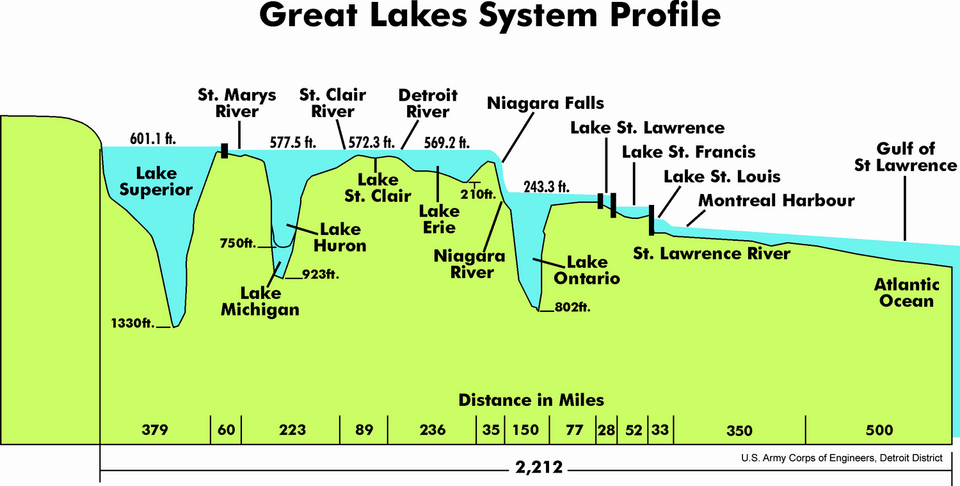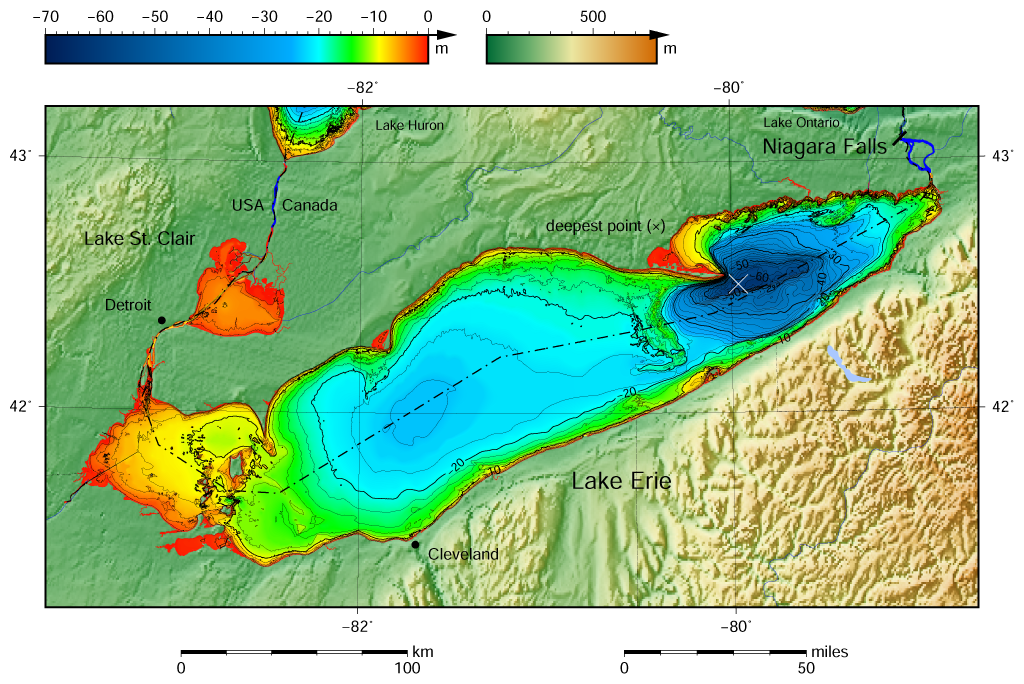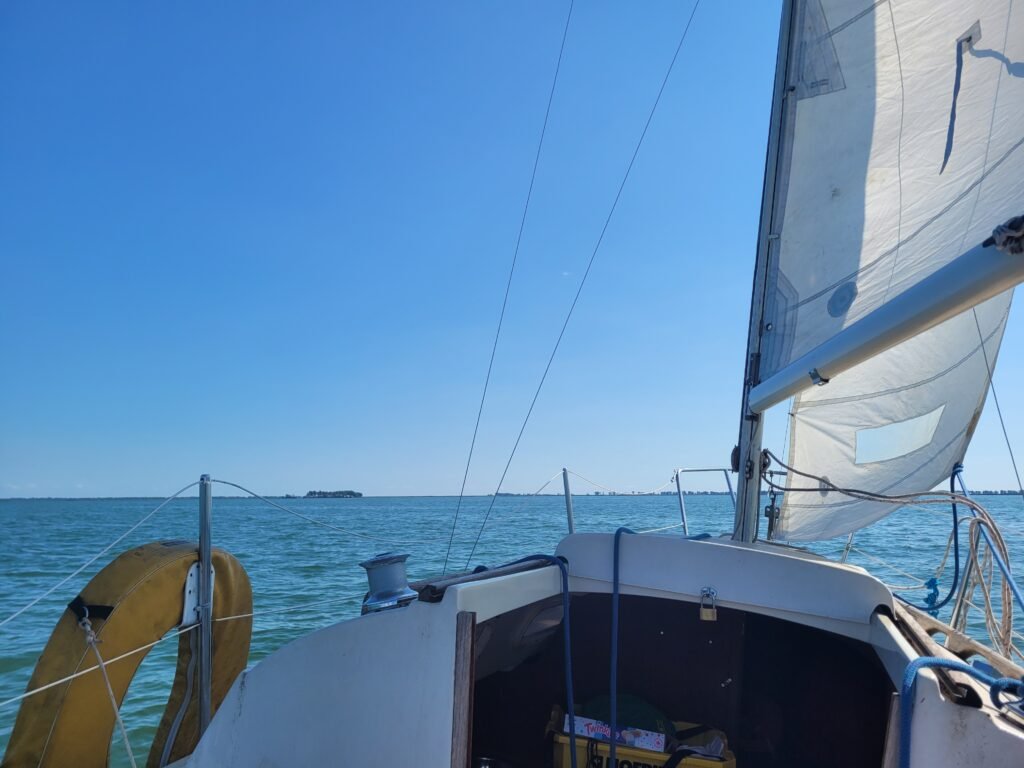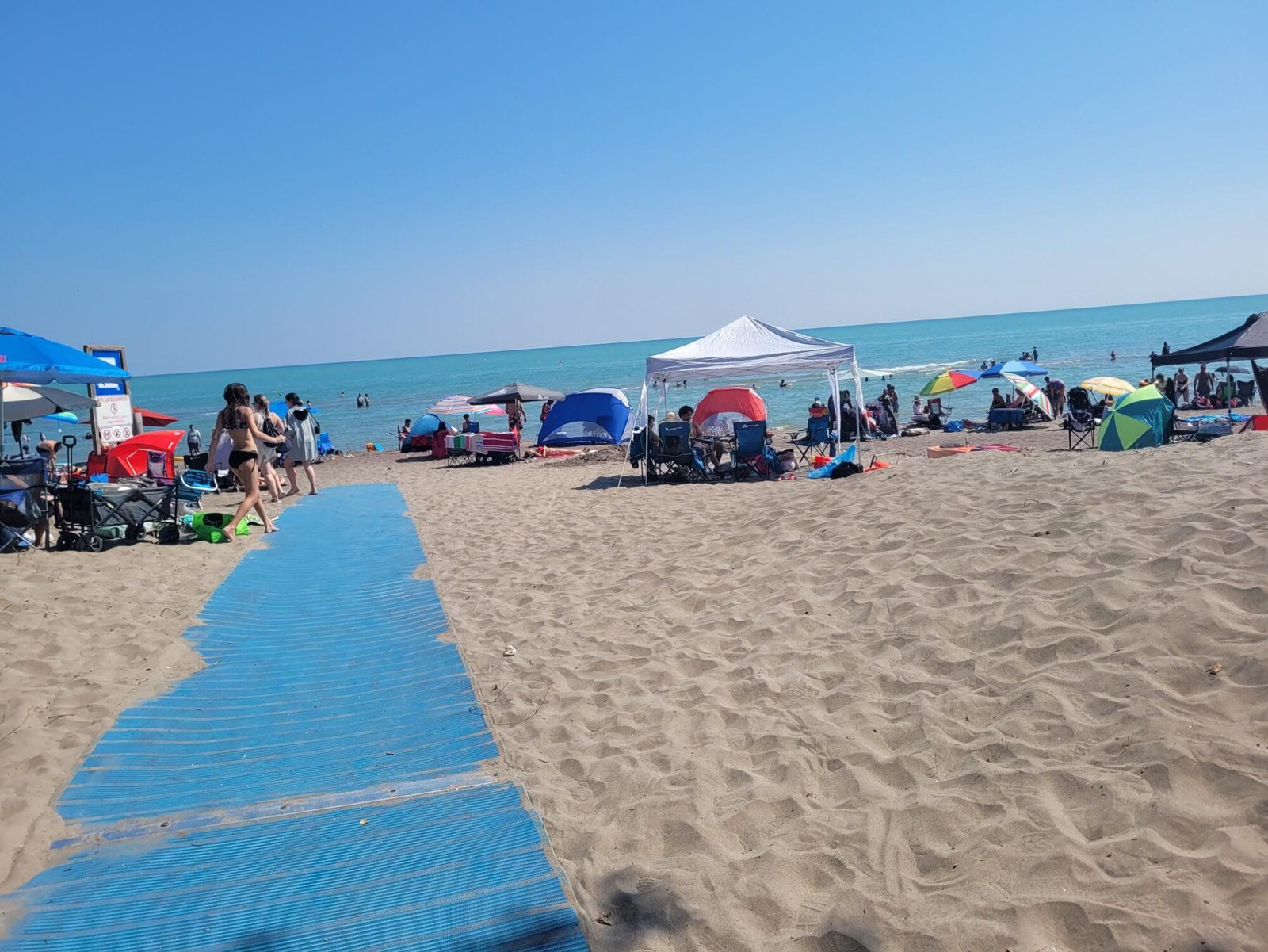

Lake Erie is the fourth lake in this sequence. Its physical characteristics set it apart: it’s the shallowest of all five Great Lakes, with an average depth of about 60 feet, which also makes it the warmest. The lake sits at an elevation of 571 feet above sea level, only 6 feet lower than the water level of the connected Michigan-Huron system at 577 feet. Because this elevation difference is minimal and spread across natural river channels rather than a steep drop, boats can move freely between Lake Erie and the Michigan-Huron waters without needing any locks. The natural water levels between these lakes are nearly the same, and the connecting channels remain undammed and open.
Specifically, Lake Michigan and Lake Huron are hydrologically one continuous body of water. They join through the wide and deep Straits of Mackinac, allowing vessels to pass back and forth at the identical water level with no barriers at all.
When traveling from the Michigan-Huron system down to Lake Erie, boats pass southward through the St. Clair River, cross Lake St. Clair—which is shallow and open—and continue through the Detroit River directly into Lake Erie. These routes rely entirely on natural waterways rather than artificial lock systems.
However, even without locks, mariners face certain challenges. Currents in the St. Clair and Detroit rivers can reach 2 to 5 knots in certain sections, requiring skillful navigation. Additionally, vessels must follow dredged shipping channels to safely navigate around shallow areas. Despite this, the entire route operates without locks because the terrain simply doesn’t require any elevation change assistance.